
Moxonidine: Beyond Blood Pressure Control
Introduction
Hypertension, peripheral tissue insulin resistance, impaired glucose tolerance, abdominal obesity, and dyslipidemia are components of metabolic syndrome identified in many elderly patients in numerous countries (1). All of these factors increase the risk of diabetes, cardiovascular diseases, and premature death. Hypertension is considered one of the main and most important components of metabolic syndrome. The main factor linking hypertension and metabolic imbalance in the body is increased sympathetic nervous system activity (2). One study found that almost half of hypertensive patients had insulin resistance, impaired glucose tolerance, and hyperinsulinemia (3, 4). Although insulin has a peripheral vasodilatory effect, it increases sympathetic nervous system tone in the brain. A pathological chain of processes is formed: increased sympathetic nervous system activity promotes the development of tissue insulin resistance, compensatory hyperinsulinemia, and hypertension (6), disrupts insulin-dependent glucose uptake into tissues (7), stimulates alpha-2 adrenergic receptors in the pancreas, promotes glucagon secretion, and inhibits insulin secretion.
For a patient with hypertension, the risk of cardiovascular diseases, insulin resistance, and hyperinsulinemia increases even further when elevated plasma triglyceride and free fatty acid levels are detected in the blood (9). Studies have shown that increased activation of the sympathetic nervous system also plays a significant role in lipid metabolism.
Since hypertension is often diagnosed together with other components of metabolic syndrome—impaired glucose tolerance, hyperinsulinism, peripheral tissue insulin resistance, and lipid metabolism disorders—the optimal antihypertensive drug or combination of drugs should not only reduce elevated blood pressure but also correct other disrupted metabolic pathways.
One of the drugs with such properties is moxonidine, a centrally acting antihypertensive drug. This article provides a summary of the main pharmacodynamic properties of moxonidine and its place in the treatment of hypertension with drug combinations.
What Is Moxonidine?
Moxonidine is a second-generation (latest) centrally acting antihypertensive drug (10). It is a selective agonist of imidazoline I1 receptors, with little effect on alpha-2 adrenergic receptors (11). By activating I1 imidazoline receptors in the rostral ventrolateral medulla (RVLM) of the brain, moxonidine reduces sympathetic nervous system activity (12). As a result, alpha-adrenergic nervous system tone in the periphery decreases, reducing systemic vascular resistance and blood pressure (13).
Unlike older-generation centrally acting antihypertensive drugs (such as alpha-methyldopa, clonidine, guanfacine, etc.), moxonidine does not bind, or binds only minimally, to alpha-2 adrenoreceptors; therefore, it does not cause drowsiness, confusion, problems with concentration, or dry mouth, and does not increase the risk of erectile dysfunction or constipation (14).
Although moxonidine has a half-life of only 2.1 hours in the human body, this drug, by binding to imidazoline I1 receptors with a non-typical compound, ensures smooth 24-hour blood pressure control when taken once daily (15). Recent studies have shown that selective activation of imidazoline I1 receptors not only corrects elevated blood pressure but also affects insulin resistance, impaired glucose tolerance, and lipid metabolism.
Clinical Benefits of Moxonidine
Effective Blood Pressure Control
The effectiveness of moxonidine monotherapy has been evaluated in several placebo-controlled clinical trials. In individuals with mild to moderate arterial hypertension, administration of moxonidine at doses of 0.2–0.6 mg/day for 8 weeks significantly reduced diastolic blood pressure (by an average of 10.7–13.2 mm Hg); this effect was statistically significantly greater than in the group of patients treated with placebo. Systolic blood pressure also decreased significantly (by an average of 19.5–24.9 mm Hg) (16, 17). The blood pressure-lowering effect of moxonidine at 8 and 26 weeks was similar to that of other antihypertensive drugs administered at equivalent doses—enalapril, atenolol, hydrochlorothiazide, nifedipine, and ramipril (18, 19).
A positive therapeutic effect has also been observed when moxonidine is administered in combination with other antihypertensive drugs. In the TOPIC (Trial of Physiotens in Combination) clinical trial, patients with mild to moderate arterial hypertension who did not respond adequately to treatment with 0.2–0.4 mg/day of moxonidine had a CCB, ACEI, or thiazide diuretic added to their treatment. This treatment was continued for 4 weeks. All combinations were more effective than moxonidine monotherapy, but the combination of moxonidine and a CCB was the most effective, producing the greatest reduction in diastolic blood pressure. With the combination of moxonidine and a CCB, diastolic blood pressure values below 90 mm Hg were achieved by a much larger proportion of patients (35.8%) compared with the combination with a diuretic (15.6%) or ACEI (22%). Diastolic blood pressure decreased by more than 10 mm Hg in almost 47% of patients treated with moxonidine and a CCB, compared with 21.1% and 26.8% of patients treated with combinations containing a diuretic and an ACEI, respectively. Similar results were obtained when evaluating changes in systolic blood pressure values—the combination of moxonidine and a CCB was the most effective.
Moxonidine, when added to already prescribed drugs, may be beneficial in treating patients with resistant arterial hypertension. Two clinical trials found that when moxonidine was prescribed at 0.2–0.4 mg/day to patients taking an average of 3 antihypertensive drugs, resting blood pressure decreased significantly: systolic blood pressure decreased from 149.8 to 134.9 mm Hg, and diastolic blood pressure from 93.4 to 81.5 mm Hg.
Protection of Target Organs and Correction of Impaired Metabolism
In recent years, many studies have analyzed the effectiveness of moxonidine in treating obesity, insulin resistance, and metabolic syndrome. In the large-scale CAMUS study, moxonidine was prescribed to hypertensive patients with obesity and metabolic syndrome. The study results revealed that after 8 weeks of treatment, participants’ blood pressure decreased from 167.5/96.6 to 140.5/83.4 mm Hg (difference –26.9/–13.2 mm Hg), with a greater reduction observed in those with higher initial blood pressure. A response to moxonidine treatment (diastolic blood pressure <90 mm Hg or a reduction >10 mm Hg) was observed in 93.8% of patients with metabolic syndrome. After 8 weeks of treatment, patients lost 1.4 kg, with the greatest reduction observed in obese patients.
Figure 1. Changes in Blood Pressure After 8 Weeks of Moxonidine Treatment in Obese Patients With Metabolic Syndrome – CAMUS Study Results (15)
| Measurement | Systolic BP (mm Hg) | Diastolic BP (mm Hg) |
|---|---|---|
| At the beginning of the study | 167.5 | 96.6 |
| After 8 weeks | 140.5 | 83.4 |
Moxonidine was also found to reduce heart rate over 8 weeks of treatment, by an average of 5.2 beats/min (from 79.2 to 74.0 beats/min) (23). The results of a multicenter, prospective, randomized trial conducted by Chazova and colleagues showed that moxonidine improves glycemic control and reduces insulin resistance in individuals diagnosed with metabolic syndrome (16).
In a study conducted by Sanjuliani and colleagues, treatment with moxonidine at conventional therapeutic doses for 24 weeks resulted in a marked reduction in plasma adrenaline and noradrenaline concentrations. This finding confirms that moxonidine reduces sympathetic nervous system hyperactivity and the risk of associated pathophysiological processes (17).
In another double-blind, placebo-controlled study, moxonidine was found to reduce sympathetic nervous system activity induced by physical activity and mental stress and may be used as an alternative to beta-blockers in stressful situations, particularly when patients are unable to take them (18). Moxonidine was also observed to reduce intraocular pressure and may be beneficial for patients with glaucoma.
In a study conducted by Krespis and colleagues, moxonidine administration in patients with hypertension reduced urinary albumin excretion and blood levels of thrombomodulin and plasminogen activator inhibitor-1 (19). Thus, moxonidine has a beneficial effect on the kidneys and reduces endothelial dysfunction.
In another similar study lasting 3 years, moxonidine administered in combination with other antihypertensive drugs was found to slow the progression of nephropathy and renal failure (20). Studies involving individuals with obesity or overweight have shown that moxonidine not only improves hypertension but also reduces blood leptin levels and body weight (13).
Numerous studies have shown that moxonidine reduces triglyceride, total cholesterol, and low-density lipoprotein cholesterol levels while increasing high-density lipoprotein cholesterol levels (21, 22).
Figure 2. Changes in Blood Pressure in Different Patient Subgroups – CAMUS Study Results (15)
| Patient Subgroup | Systolic BP at Baseline (mm Hg) | Diastolic BP at Baseline (mm Hg) | Systolic BP After 8 Weeks (mm Hg) | Diastolic BP After 8 Weeks (mm Hg) |
|---|---|---|---|---|
| All patients | 167.5 | 96.6 | 140.5 | 83.4 |
| Metabolic syndrome + AH | 167.9 | 96.2 | 140.9 | 83.3 |
| Metabolic syndrome + AH | 166.9 | 96.9 | 140.1 | 83.6 |
| Mild AH | 150.8 | 90.0 | 134.9 | 81.1 |
| Moderate AH | 163.6 | 95.4 | 139.2 | 83.2 |
| Severe AH | 185.8 | 103.1 | 146.7 | 85.2 |
The Effect of Moxonidine on Cardiac Function
Numerous epidemiological studies have shown that increased sympathetic nervous system activity is associated with increased cardiovascular morbidity and mortality. Since moxonidine reduces sympathetic nervous system hyperactivity, it may be beneficial in protecting against cardiovascular pathologies.
As is known, moxonidine is a selective imidazoline I1 receptor agonist characterized by central antihypertensive effects. Imidazoline I1 receptors are found mainly in the central and peripheral nervous systems, but they are also present in the atria. Atrial natriuretic peptide, a substance with blood pressure-lowering effects, is produced in this anatomical structure of the heart. By acting on sympathetic nervous system receptors, moxonidine increases the release of atrial natriuretic peptide and lowers blood pressure. A study in laboratory mice with primary arterial hypertension found that moxonidine restores normal cardiac imidazoline I1 receptor activity and effectively corrects blood pressure.
Another study found that moxonidine helps reduce pressure in the right atrium and pulmonary artery and optimizes the cardiac index. Studies have also observed that moxonidine administration reduces the frequency of tachyarrhythmias and increases left ventricular ejection fraction in patients diagnosed with chronic heart failure.
The Place of Moxonidine in Combination Therapy for Hypertension
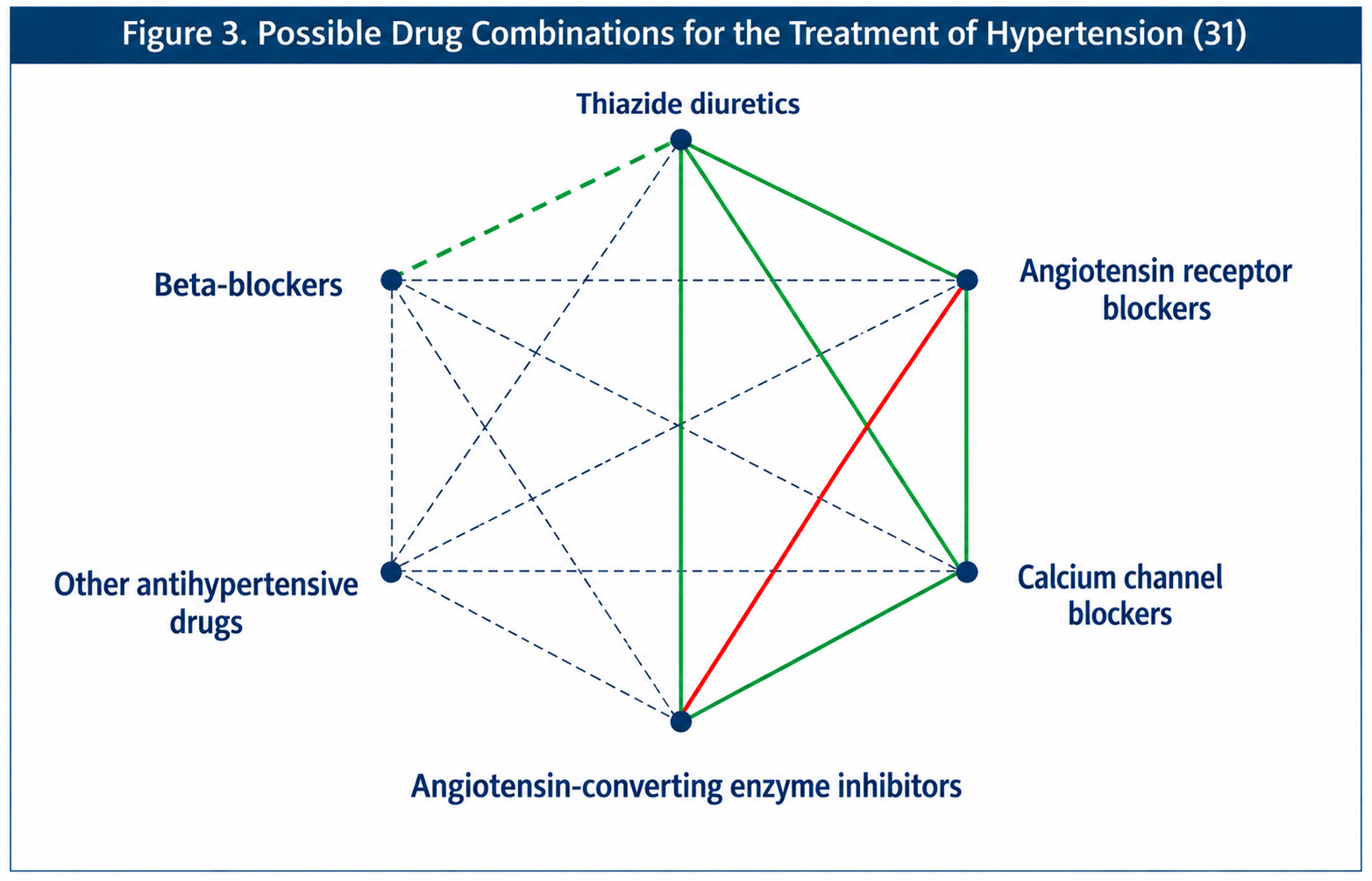
According to the 2013 recommendations of the European Society of Hypertension, first-line drugs for the treatment of arterial hypertension are diuretics, including thiazide diuretics, chlorthalidone, and indapamide; beta-adrenergic blockers; CCBs; ACE inhibitors; and sartans. If, for certain reasons, a patient cannot take these drugs, medications from other groups may be prescribed, including centrally acting antihypertensive drugs such as moxonidine. These drugs may also be considered a first choice when an additional beneficial effect is expected in a specific patient, for example, a patient with mild hypertension who is obese and has been diagnosed with dyslipidemia and prediabetes.
When first-line drugs do not provide a sufficient therapeutic effect, combinations of several medications are prescribed. Moxonidine, a centrally acting drug, can be combined with drugs from all major groups and can effectively improve the efficacy of combination therapy. It is recommended to start treatment with moxonidine at 0.2 mg/day. If necessary, the dose can be increased to 0.4 mg/day after 3 weeks. The maximum allowable dose of moxonidine is 0.6 mg/day, while for individuals with moderate renal failure, the maximum dose is 0.4 mg/day.
Summary
Choosing the optimal medication or combination of medications for a patient with hypertension is not easy. This is because, in recent years, there has been an increase in more severe cases of hypertension; patients often have multiple concomitant diseases, other cardiovascular risk factors, and factors that increase mortality. One possible drug for treating hypertension, either as monotherapy in specific cases or in combination with other drugs, is moxonidine. This medication not only effectively controls blood pressure but also has a positive effect on glycemic control, reduces postprandial hyperinsulinemia, and corrects impaired lipid metabolism.
Prepared by Dr. Berta Zaleckienė
