
Advances in the Treatment and Management of Hepatic Encephalopathy
Introduction
Hepatic encephalopathy (HE) is a neuropsychiatric syndrome that develops due to acute or chronic liver disease or the formation of portosystemic shunts. Clinical symptoms of HE range from mild psychiatric disorders to coma. The development and progression of HE are influenced by many factors: oxidative stress, changes in neurotransmitter concentrations in the body, and impaired brain metabolism.
Traditionally, HE is classified into minimal hepatic encephalopathy (MHE) and stages I–IV HE. MHE is diagnosed in patients without cognitive impairment or with mild impairment, which is detected only through specific tests. Stage I HE includes subtle behavioral disorders such as lack of attention, mood swings, and sleep disturbances. These disorders are difficult or even impossible to detect in routine tests, which is why MHE and stage I HE are referred to as covert HE in the latest classifications (1). Covert HE is detected in 40–84% of patients with liver cirrhosis and is associated with a poorer quality of life, impaired driving ability, work, and reduced overall survival. So far, there are no clear and official recommendations on how to accurately treat and manage covert HE (2). Meanwhile, the treatment of clinically evident HE (stages II–IV) often requires hospitalization or even intensive therapy, during which various treatment methods or their combinations may be applied.
For many years, the concept of the significance and prognostic value of HE, as well as its treatment, has changed several times. Many methods of HE treatment aim to reduce ammonia accumulation in the body and the intensity of systemic and local inflammation. Currently, lactulose and rifaximin are most widely used for HE correction, but as science rapidly advances, new drugs and methods for treating HE are proposed almost every year. In this article, we will review the most popular and newest aspects of HE treatment.
Non-absorbable Disaccharides
Non-absorbable disaccharides, such as lactulose and lactitol, loosen the bowels, reduce the intestinal pH, increase stool volume, accelerate bowel movements, and promote the elimination of nitrogen compounds from the body. Lactulose is the most commonly prescribed medication for treating HE. In a study by Dhiman and colleagues, a positive effect was observed in 64% of patients with covert HE treated with lactulose (3). Lactulose can also be effectively prescribed for both primary and secondary HE prevention. The most common dose is 15–45 ml of lactulose several times a day. Lactulose can be prescribed for both outpatients and patients in Intensive Care Units with hepatic coma. Possible side effects include diarrhea, abdominal pain, and bloating. Overdosing on this medication can lead to electrolyte imbalance or dehydration.
Inflammation Treatment and Antibiotics
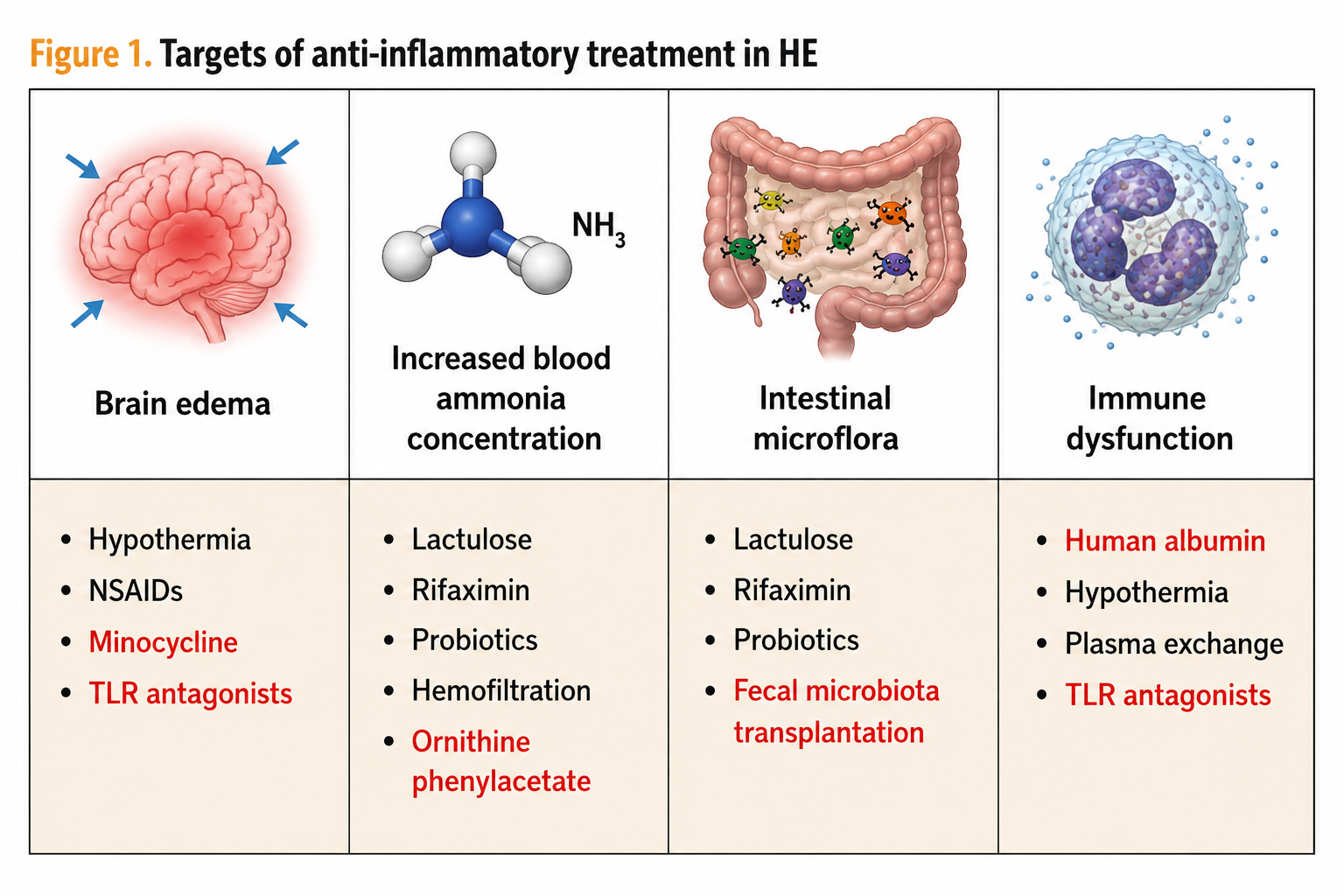
Treating inflammation, as a significant factor triggering the development of HE, is an important part of HE correction. Inflammation treatment can reduce ammonia concentration in the blood, decrease inflammatory processes in the brain, alter the gut microbiota, and dysfunction of the immune system (Figure 1) (4, 5).
One of the most influential treatments for HE was the approval of rifaximin by the United States Food and Drug Administration in 2010. The use of this medication for treating HE was approved following a study that found a 22.1% incidence of HE occurrence among individuals treated with rifaximin 550 mg twice daily, compared to 45.9% in the placebo group participants (4, 5). It was also found that the combined administration of rifaximin and lactulose reduces the risk of HE development by half for patients who have experienced at least one severe clinical episode of HE. Of course, rifaximin monotherapy is effective for HE prophylaxis (6). Rifaximin, minimally absorbed in the intestine, causes minimal side effects and is well tolerated.
L-ornithine and L-aspartate
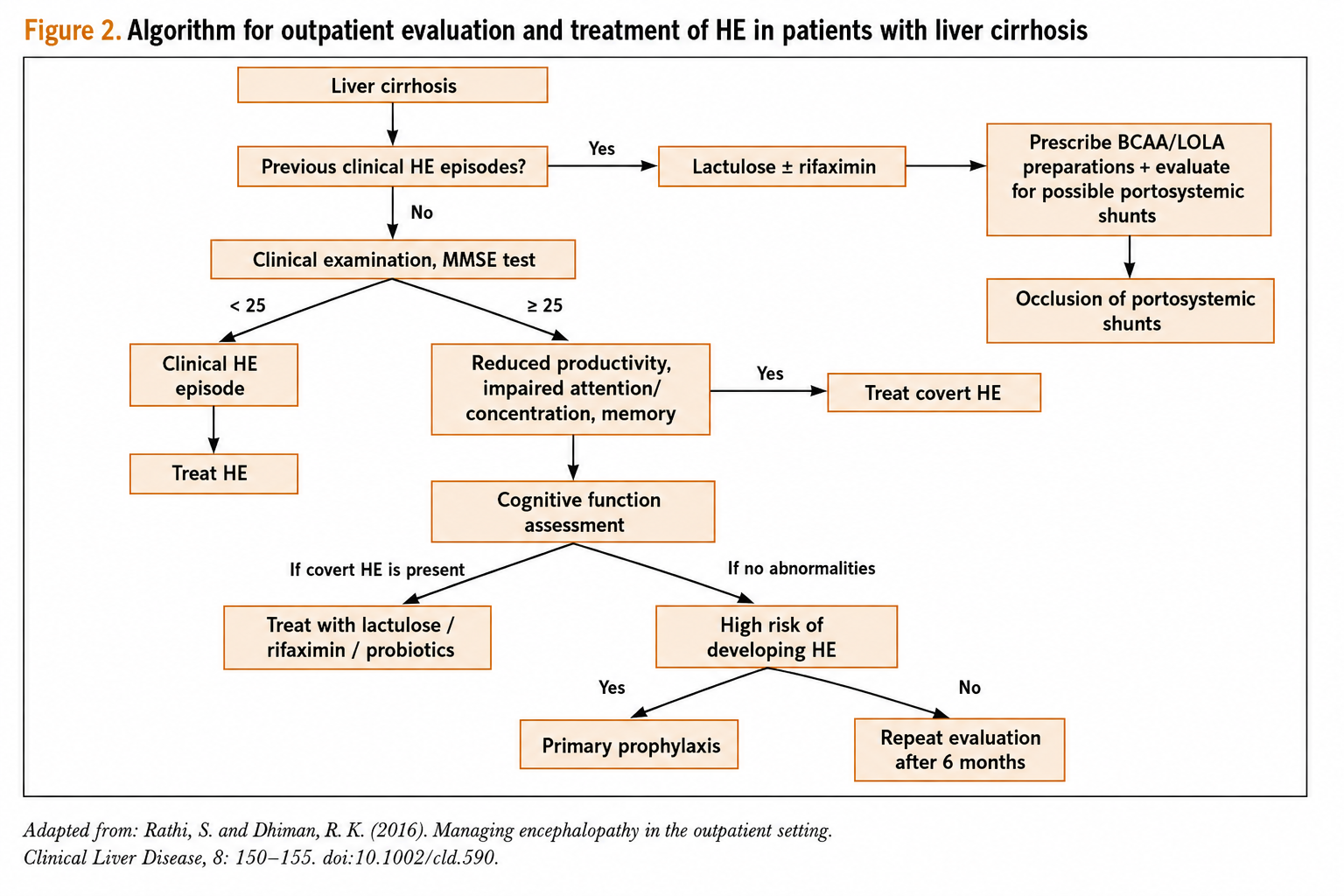
Since L-ornithine and L-aspartate (LOLA) are substrates of the urea cycle, the use of such preparations can reduce the amount of ammonia in the blood and increase urea production. LOLA activates glutamine production by stimulating glutamine synthetase in skeletal muscles and hepatocytes. Although these preparations reduce the amount of ammonia in the blood even in advanced stages of liver disease, their effectiveness is temporary. Nevertheless, some studies have shown that even 6 months after taking the medication, patients who used LOLA had fewer severe HE episodes (2). LOLA is well tolerated and has been more effective than placebos. LOLA preparations should not be given to individuals with severe kidney impairment.
Modulation of Intestinal Microflora: Probiotics and Fecal Microbiota Transplantation
Patients with progressive liver cirrhosis often experience intestinal dysbiosis with overgrowth of colonic bacteria and translocation of bacteria and their by-products through the intestinal epithelium. This phenomenon itself causes systemic inflammation and endotoxemia, which negatively affects the immune system and triggers the development of HE.
Probiotics aim to replace urease-secreting intestinal microflora with urease-non-secreting flora. A meta-analysis has shown that probiotic use improved cognitive functions, reduced the frequency of behavioral disturbances in minimal HE, decreased the incidence of severe clinical HE development, and was well tolerated. Various strains of bacteria and their sources were studied in this trial: VSL#3, specialized probiotic yogurts, Bifidobacterium longum. It was found that the use of VSL#3 probiotics was as effective as lactulose in secondary HE prophylaxis (7). Currently, research is also being conducted on how fecal microbiota transplantation can alter the intestinal microflora of patients with liver diseases and reduce the risk of HE development and/or progression.
Nutrition and Branched-Chain Amino Acids
Poor nutrition and sarcopenia may be associated with decreased ammonia metabolism in muscles and can worsen the outcome of HE. Restoring muscle mass in HE can improve ammonia metabolism in the body. It is recommended to consume 1.2–1.5 g/kg of protein per day, preferably of plant origin, and to consume at least 35–40 kcal/kg per day. Eating frequently and in small portions is recommended. Since an increased ratio of aromatic and branched-chain amino acids can trigger the development and progression of HE, additional intake of branched-chain amino acids (BCAAs) can complement the nutrition and HE treatment plan for patients.
New Preparations and Treatment Methods for HE
L-ornithine phenylacetate (LOF) reduces ammonia concentration in the blood by normalizing intestinal glutaminase activity and increasing glutamine synthetase activity in peripheral organs, especially in skeletal muscles and hepatocytes. Glutamine is conjugated with phenylacetate, and this product cannot be metabolized by glutaminase, so it is excreted in the urine. LOF preparations are safe to administer to individuals with decompensated liver cirrhosis (4). Unfortunately, LOF preparations are not yet registered in Lithuania. Glycerol phenylbutyrate (GFB) acts by creating an alternative pathway for ammonia removal from the body. GFB is included in the list of rare drugs.
Patients who frequently experience severe clinical HE or have chronic HE resistant to treatment should be evaluated for the formation of spontaneous portosystemic shunts. Portosystemic shunt embolization, balloon-occluded retrograde transvenous obliteration, may be a method to reduce the risk of HE progression. However, this procedure is not effective in advanced liver cirrhosis and may worsen portal hypertension and its outcome.
Summary
As the number of individuals suffering from chronic liver diseases increases worldwide, the incidence of HE, a severe complication of liver failure, which significantly affects the quality of life and productivity of the patient and their relatives, also rises. For this reason, it is crucial to tailor the most appropriate preparation or method to the patient to safely and effectively correct, treat HE, halt the progression, or reduce the risk of developing this condition. Currently, safe options for treating HE include lactulose, rifaximin, LOLA preparations, and various probiotics. New preparations or treatment methods are expected to be introduced in the near future, providing more opportunities to treat HE, deliver them to the market, and apply them in clinical practice.
Dr. Urtė Sakalytė
Vilnius University Hospital Santariškių Clinics
