
Seasonal Variations in Arterial Blood Pressure
August 18, 2023
Dr. Jūratė Barysienė¹˒³, Dr. Agnė Čerkauskaitė¹˒², Prof. Dr. Marius Miglinas¹˒²
¹ Faculty of Medicine, Vilnius University
² Nephrology Center, Vilnius University Hospital Santaros Klinikos
³ Heart and Vascular Center, Vilnius University Hospital Santaros Klinikos
Cold exposure is one of the most important seasonal and circadian factors contributing to increased cardiovascular and cerebrovascular morbidity and mortality. Variations in arterial blood pressure (BP) are associated with seasonal changes in ambient temperature. Elevated blood pressure is linked to low ambient temperatures, with older adults being particularly affected.
Cold-induced increases in sympathetic nervous system activity, seasonal humoral changes, and vascular conditions contribute to seasonal hypertension and blood pressure fluctuations. To reduce cardiovascular and cerebrovascular mortality, it is recommended to optimize indoor temperatures, modify lifestyle habits and behavior, and adjust antihypertensive medication doses and administration times according to the season.
Changes in arterial blood pressure (BP) are a complex phenomenon involving fluctuations in the activity and interactions of the humoral, central nervous, and autonomic nervous systems. These changes are also associated with long-term and short-term behavioral variations [1]. Research indicates that blood pressure fluctuations are more pronounced in regions with colder climates or greater seasonal temperature differences [2].
Blood pressure changes associated with low ambient temperatures contribute to increased cardiovascular and cerebrovascular mortality. The risk of ischemic stroke is 20% higher in winter and spring than in summer, while the risk of acute myocardial infarction increases by up to 53% during the colder months [3, 4].
Clinical and epidemiological studies involving healthy individuals of different ages, patients with treated and untreated hypertension, individuals undergoing dialysis, and transplant recipients have demonstrated an association between seasonal changes and blood pressure fluctuations [5].
Ambient Temperature and Seasonal Blood Pressure Variations
Numerous studies have investigated the influence of climate on seasonal blood pressure fluctuations, identifying outdoor temperature as the most important independent factor associated with this phenomenon [6]. Both systolic blood pressure (SBP) and diastolic blood pressure (DBP) tend to increase during winter [7].
Large population-based studies have found that differences between summer and winter blood pressure measurements range from 4 to 9 mmHg for SBP and from 0.6 to 5 mmHg for DBP [8, 9].
Although seasonal temperature variations affect individuals of all ages, their impact is greater among older adults. Studies conducted in the United States, the United Kingdom, Italy, Iraq, the Netherlands, Japan, Israel, and Russia found that seasonal blood pressure fluctuations differed significantly by age and were 18% greater among older individuals than among younger participants with normal or elevated blood pressure [7].
In the Three-City Study, individuals older than 80 years had an average SBP that was 5 mmHg higher in winter than in summer, independently of anthropometric characteristics and baseline blood pressure [10].
The Medical Research Council Treatment Trial, which included 17,000 men, found that on cold winter days, blood pressure was 6–7/3–4 mmHg higher among participants aged 55–64 years, compared with an increase of only 2–4/2–3 mmHg among those aged 35–44 years [11].
Climate Factors and Blood Pressure
S. Lewington and colleagues analyzed data on seasonal blood pressure fluctuations in half a million individuals aged 30–79 years across ten geographically distinct regions of China with different climatic conditions. This was the first large-scale study to comprehensively assess the relationships between various factors, including relative humidity, central heating, age, alcohol consumption, obesity, antihypertensive treatment, seasonal changes, and temperature fluctuations, and their effects on blood pressure variability.
Data collected over the four-year observation period showed that mean blood pressure was higher in winter than in summer, with greater seasonal differences among rural residents than among urban populations. During winter, blood pressure increases were more pronounced in older individuals and those with a lower body mass index (BMI). Seasonal and outdoor temperature-related blood pressure fluctuations were not associated with relative humidity or alcohol consumption.
In regions with milder winters, where indoor heating was used less extensively, winter mortality was higher. Conversely, in regions with colder winters and more intensive indoor heating, winter mortality was relatively lower [12].
Similar evidence was reported by K. Saeki and colleagues, who monitored blood pressure changes in 147 Japanese residents exposed to indoor temperature differences of up to 10°C. Based on these findings, the researchers proposed that maintaining optimal indoor temperatures during winter could reduce blood pressure fluctuations and mortality [13].
Seasonal Variations in Circadian Blood Pressure
C. Thomas and colleagues, as well as G. Charach, have suggested that the circadian (24-hour) pattern of blood pressure fluctuations may change depending on the season [7, 14]. However, different studies have reported varying magnitudes of these fluctuations.
M. Fedecostante and colleagues evaluated seasonal blood pressure variations using 24-hour ambulatory blood pressure monitoring in 1,395 patients living in a temperate climate zone, 89.3% of whom had arterial hypertension. The researchers identified changes in blood pressure according to the time of day and described associations between season and nighttime systolic blood pressure, as well as between temperature and daytime blood pressure.
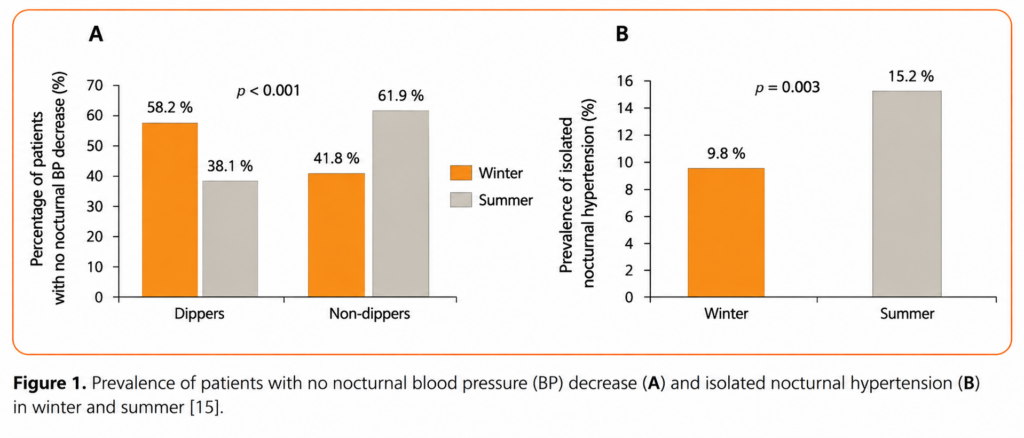
During winter, 24-hour systolic and diastolic blood pressure levels were higher (p = 0.01). In contrast, nighttime systolic blood pressure and pulse pressure were higher during summer, by 2.3 mmHg (p = 0.005) and 1.0 mmHg (p > 0.05), respectively [15].
The study demonstrated that higher ambient temperatures were associated not only with lower daytime blood pressure but also with a reduced nighttime decline in blood pressure.
Among patients receiving treatment for hypertension, a significant increase in nighttime systolic blood pressure was observed during hot weather, independently of sex and age. The development of isolated nocturnal hypertension was also documented, defined as nighttime systolic blood pressure above 120 mmHg or diastolic blood pressure above 70 mmHg (Figure 1).
The mechanisms responsible for increased nighttime blood pressure during summer, and the reasons for its greater frequency, remain unclear. Physical activity, sleep quality and duration, ambient temperature, and differences between outdoor and indoor temperatures may all influence day–night blood pressure fluctuations.
Nevertheless, differences in sleeping habits and reductions in antihypertensive medication doses during summer are believed to have the greatest influence on these blood pressure variations [15].
Effects of Climate and Seasonal Changes on Blood Pressure
Seasonal effects on blood pressure may be both short-term and long-term. Ambient temperature can cause blood pressure to rise rapidly, within 1–7 days, or gradually as the seasons change.
Short-term temperature fluctuations primarily affect daytime blood pressure, whereas seasonal changes predominantly influence nighttime systolic blood pressure and the morning blood pressure surge.
The effects of short-term and long-term temperature changes on blood pressure frequently overlap, and other factors may also contribute.
A study by M. Morabito and colleagues found that atmospheric disturbances, including storms, strong winds, and weather fronts associated with transitions from anticyclonic to cyclonic conditions, were associated with temporary increases in blood pressure lasting several days.
During these periods, 24-hour blood pressure increased by 5–8 mmHg, daytime blood pressure by 4 mmHg (range: 0–7 mmHg), and nighttime blood pressure by 6 mmHg (range: 3–10 mmHg).
These increases were independent of BMI, age, sex, antihypertensive treatment status (treated or untreated), the number of antihypertensive medications used, and daily meteorological conditions, including air temperature, cloud cover, relative humidity, atmospheric pressure, and wind [16].
Pathophysiological Mechanisms
Neurohumoral Regulation
Blood pressure (BP) depends on cardiac output, peripheral vascular resistance, and heart rate. In healthy individuals, cardiac output and stroke volume decrease by 10% and 15%, respectively, during winter, while heart rate and peripheral vascular resistance increase by 5% and 11%, respectively (p < 0.15) [7].
The sympathetic nervous system (SNS) plays a major role in blood pressure regulation. Cold exposure activates the SNS and the renin–angiotensin–aldosterone system (RAAS). Increased release of norepinephrine and vasoconstrictive peptides, such as neuropeptide Y, causes arteriolar constriction and increases systemic peripheral vascular resistance, resulting in an elevated heart rate and blood pressure [1]. At low temperatures, sweating and salt loss decrease, plasma sodium concentration rises, and the RAAS is activated [17].
An inverse relationship has been observed between daily urine output and mean ambient temperature during winter [13]. Studies have demonstrated that cooling of the skin significantly increases peripheral vascular resistance and blood pressure through changes in vasomotor tone. The increase in blood pressure also depends on cold-induced vasoconstriction of visceral arteries, including the superior mesenteric and renal arteries [13]. According to published evidence, cold-related increases in plasma and urinary epinephrine and norepinephrine occur in both patients with arterial hypertension and healthy individuals [17].
Vascular Condition and Blood Pressure Fluctuations
Arterial stiffness is an independent factor associated with seasonal blood pressure fluctuations [1, 18]. Pulse wave velocity (PWV), an indicator of vascular stiffness, correlates with winter–summer differences in systolic blood pressure and is age-dependent [19]. During summer, peripheral vascular resistance decreases partly because of suppression of the baroreflex response caused by cutaneous vasodilation [18].
Effects of Vitamin D on Blood Pressure Fluctuations
Studies have shown that day length, or the duration of daylight, also influences blood pressure. Cold-induced vasoconstriction may affect blood cells, cause erythrocyte deformation, and increase blood viscosity, peripheral vascular resistance, and blood pressure.
Reduced ultraviolet radiation during winter decreases vitamin D3 synthesis in the epidermis. Consequently, vitamin D deficiency activates the RAAS, contributing to increased blood pressure [1].
Seasonal Changes in Lifestyle and Behavior
The development or worsening of hypertension during winter may also be associated with increased food and salt consumption, reduced physical activity, and weight gain [1].
Poor dietary habits and concerns about drinking excessive fluids because of urinary incontinence or heart failure may lead older adults to consume less fluid. This may also affect the mechanisms involved in seasonal blood pressure adaptation.
In contrast, individuals who exercise regularly tolerate cold-induced stress more effectively. They develop physiological adaptation mechanisms involving changes in humoral regulation, including reduced serotonin levels and increased vagal control. Consequently, seasonal blood pressure fluctuations tend to be smaller in these individuals [13].
Other Seasonal Factors Affecting Blood Pressure
Clinical studies and observational data indicate that atmospheric pressure, rainfall, and climatic humidity do not influence blood pressure. Other factors, including reduced stress during summer vacations, physical exercise, mood (including bipolar disorder), cognitive function, behavioral changes, and biological processes, may also contribute to blood pressure fluctuations [7].
P. Siha and colleagues investigated a population of women in India and confirmed an association between body mass index (BMI) and seasonal blood pressure fluctuations. Lower body weight was associated with a more pronounced increase in blood pressure during winter compared with obese, normal-weight, or overweight individuals (p < 0.05) [20].
Seasonal changes have also been observed in laboratory parameters. During winter, inflammatory markers such as C-reactive protein (CRP) increase, while patients with diabetes mellitus experience significant increases in glycated hemoglobin, cholesterol, and fasting blood glucose levels [21, 22]. Factor VII coagulation activity, erythrocyte counts, and platelet counts also increase during the colder months.
These changes may increase the risk of arterial thrombosis and cardiovascular and cerebrovascular diseases [1].
Y. Y. Al-Tamer and colleagues demonstrated that higher ambient temperatures were associated with lower blood pressure and total cholesterol levels, as well as higher high-density lipoprotein (HDL) cholesterol levels, in both healthy individuals and patients with arterial hypertension (p < 0.001) [23].
Treatment and Recommendations
One of the most commonly used methods for assessing sympathetic nervous system activity is the diastolic blood pressure response to cold exposure. An inverse relationship between diastolic blood pressure and room temperature has been established [7]. Therefore, blood pressure measurements taken in a cold room may be misleading.
On the other hand, blood pressure readings may also change when measurements are performed in a warm environment. For this reason, guidelines for the diagnosis and treatment of arterial hypertension recommend measuring blood pressure at a standardized room temperature.
Increases in blood pressure during winter or on cold days are directly associated with an elevated risk of cardiovascular disease. During periods of substantial outdoor temperature fluctuations, blood pressure should be monitored carefully, particularly in older adults.
Although antihypertensive medications do not prevent seasonal blood pressure fluctuations, antihypertensive treatment attenuates the autonomic nervous system response and changes in autonomic tone induced by cold winter weather, helping to achieve better blood pressure control [24, 25].
Hypertension Management According to Seasonal Blood Pressure Fluctuations
Although the seasonal effects of temperature on blood pressure are observed in clinical practice, particularly among older adults, hypertension diagnosis and treatment guidelines do not provide separate treatment recommendations for different seasons. Instead, they specify target blood pressure levels.
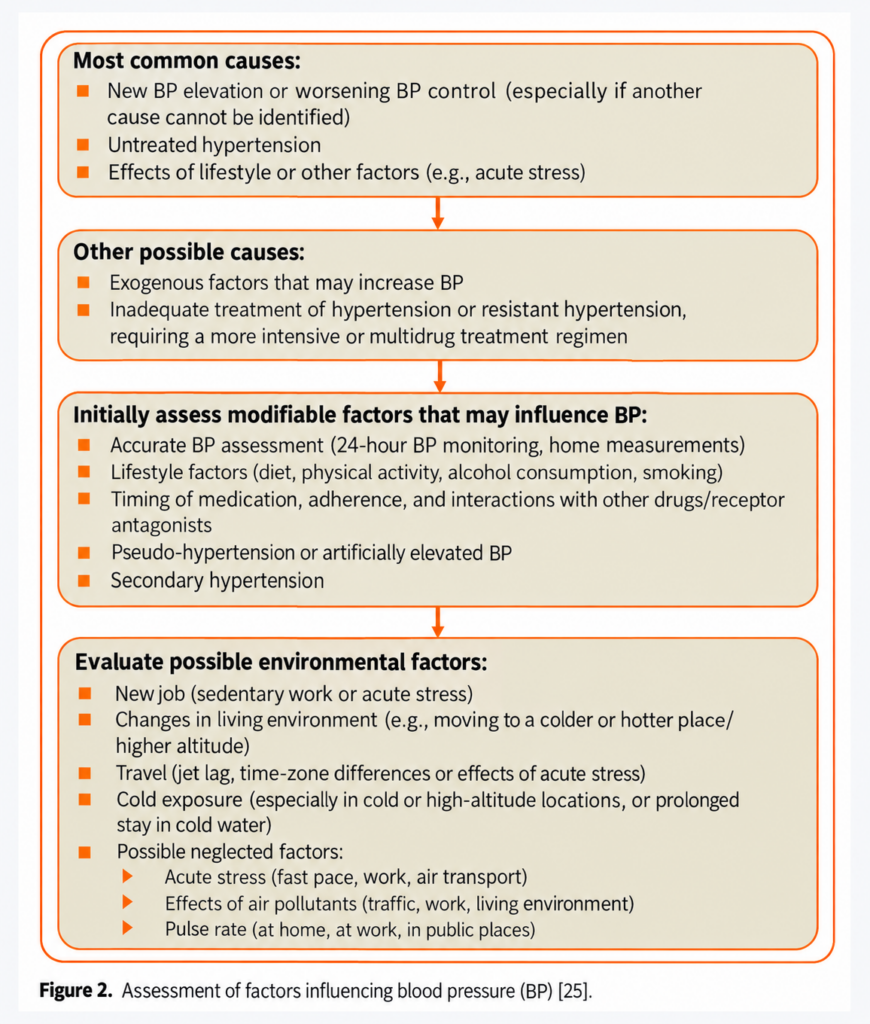
Nevertheless, hypertension treatment should be adjusted according to seasonal changes. To distinguish seasonal blood pressure variations from fluctuations caused by other environmental factors, clinicians may follow the algorithm proposed by R. D. Brook and colleagues [25] (Figure 2).
Antihypertensive Drug Classes
Compared with placebo, medications such as metoprolol, carvedilol, lisinopril, eprosartan, and amlodipine have only a limited effect on cold-induced increases in blood pressure [26].
For the treatment of arterial hypertension, medications acting on the RAAS, particularly angiotensin receptor blockers (ARBs), and calcium channel blockers (CCBs) are recommended because they not only lower blood pressure but may also provide additional protection against stroke [27].
Different classes of antihypertensive medications have varying effects on blood pressure variability.
An analysis of the effects of antihypertensive treatment on blood pressure fluctuations and clinical outcomes found that calcium channel blockers and non-loop diuretics reduced systolic blood pressure variability by 19% and 13%, respectively. In contrast, angiotensin-converting enzyme inhibitors (ACEIs), ARBs, and beta-blockers increased variability by 8%, 16%, and 17%, respectively. These findings were reported in a meta-analysis of 389 studies.
Compared with placebo, the greatest reduction in blood pressure variability was observed with calcium channel blockers (24%). Higher doses of calcium channel blockers further reduced blood pressure variability, whereas increasing beta-blocker doses was associated with greater variability.
Recommendations
Seasonal blood pressure fluctuations are clinically significant and may increase cardiovascular risk [3]. These fluctuations may contribute to arterial hypertension remaining undiagnosed, untreated, or inadequately managed.
Measuring blood pressure during different seasons may help identify arterial hypertension and initiate treatment in a timely manner. As seasons and ambient temperatures change, careful blood pressure monitoring is recommended, particularly for older patients, to prevent complications associated with blood pressure fluctuations [6].
Patients with hypertension may require higher medication doses or additional antihypertensive agents during winter.
Protection against low temperatures, including improved indoor heating, increasing prescribed medication doses, or introducing additional medications, may reduce blood pressure and cardiovascular mortality during winter.
Appropriate titration of antihypertensive treatment according to a "seasonally adjusted chronotherapeutic approach" is recommended to maintain optimal daytime and nighttime blood pressure control throughout the year.
During summer, administering at least one antihypertensive medication at bedtime may help prevent orthostatic hypotension during the hottest hours of the day, improve nighttime blood pressure control, and reduce cardiovascular risk.
At this time of year, antihypertensive treatment should not be reduced unless symptomatic hypotension occurs [1].
Source: Lietuvos gydytojo žurnalas (Lithuanian Doctor's Journal)
