
Spices and Herbs May Help Reduce the Risk of Cardiovascular Disease
Common risk factors for cardiovascular diseases (CVD) include high levels of low-density lipoprotein cholesterol (LDL-C), low levels of high-density lipoprotein cholesterol (HDL-C), high blood pressure, smoking, and diabetes mellitus. Genetics and inflammatory factors also play a role in the development of CVD. For both healthy individuals aiming to prevent CVD and patients with these conditions, the basis of nutrition should consist of a rich consumption of vegetables and fruits, whole-grain bread and cereal products, poultry, fish, nuts, legumes, and low-fat dairy products, while the intake of foods high in sodium and trans fats, sweets, sugary drinks, and red meat should be limited. Spices and herbs contain potentially bioactive substances; therefore, their influence on insulin and lipid concentrations in the blood, as well as their effect on inflammation, has been evaluated in clinical studies.
Effect of a Spice Mix on Postprandial Insulin and Blood Triglyceride Concentrations and Antioxidant Capacity
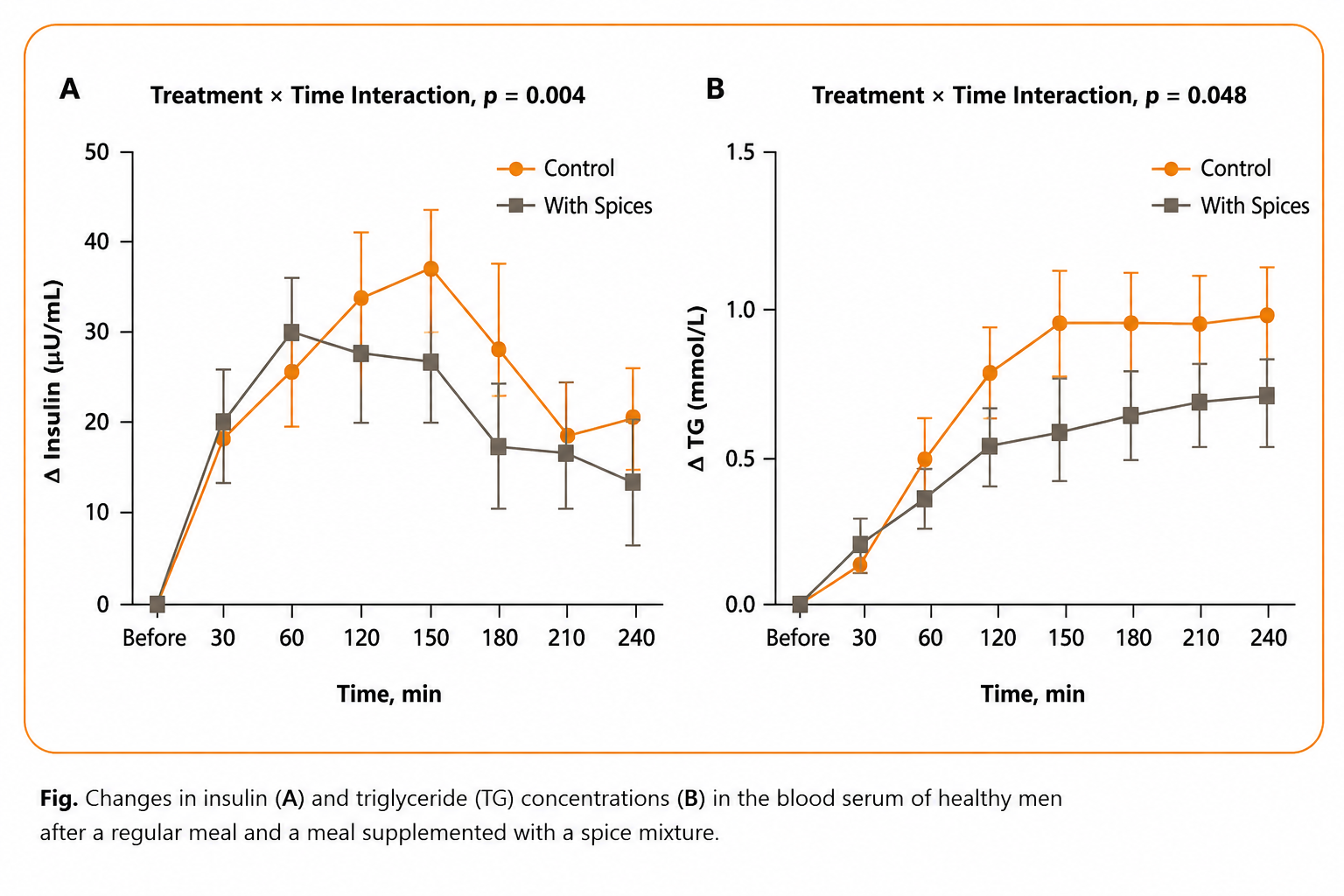
The aim of the study was to investigate whether a high dose of an antioxidant-rich spice mix (14 g) consumed with a meal induces changes in blood composition. The study involved six overweight men aged 30–65. Before the study, blood samples were taken, and the participants were divided into two groups: one group was served a control meal consisting of sponge cake, chicken with coconut, and cheese bread, while the other group received the same meal supplemented with a mix of black pepper, cinnamon, cloves, garlic powder, ginger, marjoram, paprika, rosemary, and thyme.
It was not possible to blind the participants as to which group received the control meal and which received the experimental meal because the amount of spice mix was quite large. Blood samples were taken immediately after the meal and every 30 minutes until eight blood samples had been collected. Lipid, glucose, and insulin concentrations in the blood were measured.
To assess plasma antioxidant capacity, the hydrophilic, lipophilic, and total oxygen radical absorption capacity of the blood plasma were analyzed. A higher total antioxidant capacity indicates lower oxidative stress in the body, which is a cause of many chronic diseases.
The meal supplemented with spices and herbs significantly reduced the area under the curve reflecting postprandial insulin concentration by 21% (p = 0.004) and blood triglyceride concentration by 31% (p = 0.048) (see figure). The hydrophilic oxygen radical absorption capacity was 13% higher (p = 0.02) in the group of participants who consumed the meal with spices compared with the control group, while there was no difference in lipophilic or total oxygen radical absorption capacity between the groups.
The different meals did not affect total cholesterol, LDL-C, or glucose concentrations in the blood. Based on the results obtained, it can be assumed that a mix of spices and herbs may help improve insulin and blood triglyceride concentrations after consuming a high-fat meal and increase the antioxidant capacity of the blood.
Effect of Cinnamon on Blood Lipid Concentrations
Several studies have observed a favorable effect of cinnamon (Cinnamomum verum J. Presl, Lauraceae) on lipid concentrations in human blood, although studies of a similar nature have also been published that did not find such benefits.
For example, Khan et al. reported a 7–30% decrease in total cholesterol, LDL-C, and serum triglyceride concentrations in adults with type 2 diabetes who consumed 1, 3, or 6 g of cinnamon daily for 40 days compared with patients taking a placebo (p < 0.05).
A meta-analysis and systematic review of ten randomized controlled trials evaluating the effect of cinnamon in patients with type 2 diabetes also found a significant (p = 0.05) reduction in total cholesterol (-0.4 mmol/l), LDL-C (-0.24 mmol/l), and triglyceride (-0.33 mmol/l) concentrations, as well as an increase in HDL-C concentration (0.025 mmol/l), when cinnamon was consumed in amounts ranging from 120 mg/d to 6 g/d.
However, Markey et al. did not find any differences in postprandial blood plasma lipid concentrations between groups of healthy adults consuming a high-fat meal with 3 g of cinnamon. In a study by Ziegenfuss et al., adults with prediabetes consumed a diet supplemented with 500 mg/d of cinnamon extract for 12 weeks, and no differences in total cholesterol, LDL-C, HDL-C, or triglyceride concentrations in the blood were found compared with the placebo group.
Effects of Garlic on Blood Lipid Concentrations
A meta-analysis of 39 clinical trials found that garlic (Allium sativum L., Amaryllidaceae) was effective in reducing total cholesterol (-0.43 mmol/l, p < 0.001) and LDL-C concentrations (-0.23 mmol/l, p = 0.02) in blood serum and slightly increased HDL-C concentration (+0.02 mmol/l, p = 0.02) in patients with elevated total cholesterol (>5.1 mmol/l).
In these studies, patients consumed garlic daily in various forms and amounts: from 600 to 5600 mg of garlic powder, from 9 to 18 mg of garlic oil, from 1000 to 7200 mg of aged garlic extract, and from 4 to 10 g of fresh garlic.
An 8% reduction in total cholesterol concentration with garlic is considered clinically significant and is associated with a 38% reduction in the risk of unwanted coronary artery disease events in individuals over 50 years old. Although garlic preparations are well tolerated compared with drug therapy, which sometimes causes adverse effects, it has not yet been clarified whether garlic consumption reduces the risk of unwanted CVD complications or mortality, so more research is needed on this topic.
Conclusions
Spices and herbs contain many substances that can reduce inflammation and improve blood parameters associated with increased CVD risk. However, there is still insufficient literature to support this effect, and clinical data are not comprehensive. The favorable effects of spices and herbs on blood vessels, as well as their effectiveness and safety compared with drugs, create a new area for scientific research, especially considering the significant impact cardiovascular diseases have on public health.
Source: “Lithuanian Doctor’s Journal”
