
Tension Headache: How to Help a Patient Effectively
Gabija Visockytė Vilnius University Faculty of Medicine
Introduction
Rare is the person who can boast of never having experienced a headache—an annoying, exhausting, and often daily life–disrupting sensation that occurs unexpectedly and can last from a few minutes to several days or even weeks. It is difficult to determine the exact prevalence of this symptom, but it is believed that more than 90% of people have experienced a headache at least once in their lifetime, and approximately every other adult has had a headache at least once in the past year. Headache is the most common disorder of the nervous system worldwide (1).
Headache is not a separate disease—it is a symptom, a signal sent by the body that something is wrong. The causes of pain can be very diverse—from simple fatigue and stress to serious and potentially dangerous diseases. For this reason, unusual, recurrent, severe, or prolonged headaches that are not relieved by medication should not be ignored and should prompt a visit to a doctor. There are many primary and secondary causes of headaches, so only a specialist who has performed all the necessary tests can make an accurate diagnosis and prescribe appropriate treatment.
Types of Headaches
According to etiology, headaches are classified as primary (occurring without any other predisposing cause) and secondary (caused by underlying factors such as diseases, conditions, medications, or environmental influences). According to the Third International Classification of Headache Disorders (2018), the following types of headaches are distinguished (2):
1. Primary headaches.
a. Migraine—an episodic headache accompanied by various neurological, gastrointestinal, and autonomic nervous system symptoms. It is estimated that more than 10% of people worldwide suffer from it. In 2010, migraine was identified as the third most common disease worldwide, and in 2015, it was declared the third most disabling disease among people under 50 years of age. Migraines affect women twice as often—it is believed that inflammatory cytokines and hormonal mechanisms play a role in sensitizing nerves and blood vessels.
b. Tension-type headache—the most common primary headache, occurring in approximately 3% of the population (chronic form, lasting 15 days or more per month) and up to 70% (episodic form, lasting less than 15 days per month). It is often described as a pressing or tightening sensation and may be related to stress or disorders of the neck muscles and musculoskeletal system.
c. Trigeminal autonomic cephalalgias—episodes of intense unilateral pain occurring in the orbital, supraorbital, and/or temporal regions, lasting 15–180 minutes. This group includes cluster headaches, which may occur in episodic or chronic forms.
d. Other primary headache disorders.
2. Secondary headaches.
a. Headache associated with head and/or neck trauma.
b. Headache associated with vascular disorders of the head and/or neck.
c. Headache associated with non-vascular intracranial disorders.
d. Headache associated with the use or withdrawal of certain substances.
e. Headache associated with infection.
f. Headache associated with disturbances in homeostatic processes.
g. Head or facial pain associated with pathology of the skull, neck, eyes, ears, nose, sinuses, teeth, oral cavity, or other facial or neck structures.
h. Headache associated with psychiatric disorders.
i. Other headache disorders.
Tension-Type Headache
Tension-type headache is a disorder of the nervous system characterized by a tendency toward mild to moderate headache episodes (4). Despite numerous and comprehensive clinical studies, the pathophysiology of this condition is not fully understood. It is believed that infrequent episodic tension-type headaches are caused by increased stimulation of peripheral afferent neurons originating from the head and neck muscles.
In cases of chronic tension-type headache, long-term muscle tension and psychological stress contribute to the development of pain, although they are not the only factors involved. In some patients, there may also be generalized increased pain sensitivity or dysfunction in the brain’s pain-processing centers.
Although this condition can occur in children, the highest incidence is observed in individuals aged 40–49. Tension-type headaches are more commonly diagnosed in women than in men (ratio 5:4), and this difference becomes more pronounced in chronic cases. There is also a direct relationship between educational level and the incidence of tension-type headaches (4, 5).
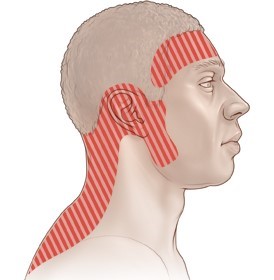
Clinical Symptoms
Infrequent episodic tension-type headache manifests as episodes of mild to moderate intensity pain (rated ≤3 points on a visual analog scale), lasting for a short time and resolving spontaneously or after taking common pain medications. Patients describe the pain as a sensation of muscle tightness, pressure, or squeezing, felt symmetrically on both sides of the head and sometimes described as a band around the head. The pain often arises in or may extend to the back of the neck.
Unlike migraine, this type of headache rarely presents with additional symptoms such as sensitivity to light or sound, nausea, vomiting, visual or speech disturbances, muscle weakness, or other neurological symptoms. The specific type of tension-type headache depends on the frequency of symptoms, their intensity, and the response to common pain medications (5, 8).
Infrequent Episodic Tension-Type Headache
Patients experience typical headaches lasting from a few minutes to several days. This type of pain does not worsen with routine physical activity and is not associated with nausea, although sensitivity to light or sound may occasionally occur.
Diagnostic criteria:
- At least 10 episodes of headache.
- Duration of pain from 30 minutes to 7 days.
- The pain has at least two of the following characteristics:
a. Bilateral location.
b. Pressing or tightening (non-pulsating) quality.
c. Mild or moderate intensity.
d. Not aggravated by routine physical activity (e.g., walking or climbing stairs). - Both of the following:
a. No nausea or vomiting.
b. No more than one of the following: sensitivity to light OR sound. - Does not meet the diagnostic criteria for other headache disorders.
Frequent Episodic Tension-Type Headache
As the name suggests, this type differs from infrequent episodic tension-type headache mainly in frequency, while other characteristics remain the same.
Key diagnostic criterion:
- At least 10 headache episodes occurring on average 1–14 days per month for more than 3 months (≥12 days per year).
Chronic Tension-Type Headache
This condition develops as a progression from frequent episodic tension-type headache. Patients complain of very frequent (sometimes daily) headaches that can last from several hours to several days or may be continuous.
Diagnostic criteria:
- Headache occurring on at least 15 days per month for more than 3 months (≥180 days per year) and meeting criteria 2–4.
- Pain lasting from several hours to several days or being continuous.
- The pain has at least two of the following characteristics:
a. Bilateral location.
b. Pressing or tightening (non-pulsating) quality.
c. Mild or moderate intensity.
d. Not aggravated by routine physical activity (e.g., walking or climbing stairs). - Both of the following:
a. No more than one of the following: sensitivity to light OR sound OR mild nausea.
b. No severe nausea or vomiting. - Does not meet the diagnostic criteria for other headache disorders.
Probable Tension-Type Headache
This diagnosis is applied when a headache does not fully meet the criteria for tension-type headache but has features typical of this condition. It can only be diagnosed if no other headache disorder better explains the symptoms (2, 3).
Diagnosis of Tension-Type Headache
The diagnosis of this condition is primarily based on a detailed medical history and patient-reported symptoms. To determine the type of headache, patients are often asked to keep a headache diary, recording:
• When the pain starts (day and time).
• How long the pain lasts.
• The nature and intensity of the pain.
• The location where the pain begins and how it spreads.
• Any additional symptoms accompanying the headache.
• Circumstances at onset (e.g., stress, sleep deprivation, dietary changes, menstrual cycle phase, alcohol consumption).
• Factors that relieve the pain.
By analyzing diary entries over at least 1–3 months and applying diagnostic criteria, it is possible to identify or at least suspect a specific type of tension-type headache. Laboratory or imaging tests are not typically required and are not routinely performed. Additional evaluation may be recommended if secondary causes of headache are suspected (6).
Taking into account the characteristics of the patient’s headaches and aiming to apply the most effective treatment, differential diagnosis between different types of headaches can be performed.
Table 1. Differential diagnosis of different types of primary headaches (8, 9) + – characteristic feature, (+) – may be a characteristic feature, – – not a characteristic feature.
| Feature | Migraine | Tension-type headache | Cluster headache |
| Pain location |  |
 |
 |
| Photophobia | + | (+) | - |
| Phonophobia | + | (+) | - |
| Nausea and/or vomiting | + | - | - |
| Aura | (+) | - | - |
| Tearing | - | - | + |
| Rhinorrhea | - | - | + |
| Pain worsening under stress | + | - | - |
| Unilateral pain only | - | - | + |
| Positive response to triptans | + | - | + |
| Positive response to oxygen therapy | - | - | + |
Treatment of Tension-Type Headache
The goals of treatment depend on the specific type of the condition. For episodic forms, symptomatic treatment is prescribed. Its main goal is to reduce pain and improve quality of life. If patients are informed and cooperative, self-treatment with over-the-counter pain relievers may be recommended. In the absence of changes in headache symptoms (no increase in intensity, frequency, or the appearance of additional symptoms), long-term monitoring and follow-up are not necessary.
For very frequent episodic or chronic tension-type headaches, the primary goal of treatment is to achieve long-term remission. If this is not possible, it is important to find a balance between symptom relief and the risk of medication overuse, which can lead to secondary headaches and worsen the patient’s condition. For this reason, patients with chronic headaches are advised to use only medications prescribed by a doctor, avoid increasing doses or frequency on their own, and attend regular follow-up visits.
Drug Therapy
For most patients, effective symptomatic drug treatment can be prescribed if headache episodes occur no more than 2 days per week. In such cases, over-the-counter pain relievers are recommended, such as aspirin 600–900 mg (except in children under 16 years of age) or ibuprofen 400 mg. Nonsteroidal anti-inflammatory drugs may also be used (ketoprofen 25–50 mg, naproxen 250–500 mg). Paracetamol (500–1,000 mg) is generally less effective (8, 10).
Symptomatic treatment is not suitable for chronic headaches due to the risk of medication overuse. The following alternatives may be prescribed:
• Naproxen 150–500 mg for a 3-week course, taken regularly every day. The aim is to break the cycle of constant or frequently recurring headaches. If the treatment is ineffective, repeating the course is not recommended (10).
• Amitriptyline—a tricyclic antidepressant used in this case not for its antidepressant effects but for headache prevention. Treatment is started with low doses (10–25 mg at night), gradually increased every 1–2 weeks (by 10–25 mg) up to a final dose of 75–100 mg at night. This approach has a preventive effect and helps reduce chronic headache development. If improvement is observed after 4–6 months, treatment discontinuation may be considered.
Treatment with tricyclic antidepressants may fail due to insufficient dosing, inadequate duration, or poor patient adherence. To avoid this, patients should be informed in advance about the treatment plan and expected outcomes (8, 10, 11).
If Drug Therapy Is Ineffective
Chronic tension-type headaches may be resistant to drug treatment. In such cases, depending on patient motivation and individual characteristics, non-pharmacological approaches may be recommended.
Some pain clinics offer cognitive-behavioral therapy, acupuncture targeting neck and scalp muscles, and transcutaneous electrical nerve stimulation. Although these methods are not universally validated, they may improve symptoms and quality of life in some patients, especially when combined with amitriptyline.
Prevention
It has been observed that the development of tension-type headaches (especially episodic ones) is closely related to environmental and lifestyle factors. Therefore, patients are encouraged to modify their daily habits:
• Tension-type headaches are more common in individuals with a sedentary lifestyle. Regular physical activity is recommended—walking, running, attending a gym, dancing, or any preferred sport. This improves physical health and helps reduce stress.
• Comprehensive physiotherapy may be beneficial for patients with musculoskeletal problems. Techniques such as massage, mobilization, targeted exercises, and posture correction help reduce tension in neck and shoulder muscles. This is particularly effective after injury, although results may be less pronounced in degenerative cervical spine conditions. Symptoms may temporarily worsen at the start of therapy, but long-term improvement is often achieved.
• If headaches are linked to stress, relaxation techniques may be helpful. Cognitive-behavioral therapy can teach stress management strategies, while yoga or meditation may also provide benefits (8, 10, 11).
Summary
Tension-type headache is a common and often unpleasant condition that can negatively affect well-being, mood, and productivity. By improving lifestyle habits, the frequency of headache episodes can be reduced, while timely use of pain relievers helps manage symptoms effectively.
In more severe or chronic cases, achieving remission may require a combination of pharmacological treatment (such as tricyclic antidepressants) and non-pharmacological approaches. It is important to avoid medication overuse, as this can lead to secondary headaches and further worsen the patient’s condition.
Publication "Internistas" No. 8 2019.
Literature1. World Health Organization. Headache disorders, 2016. Available online: https://www.who.int/news-room/fact-sheets/detail/headache-disorders. 2. Headache Classification Committee of the International Headache Society (IHS) The International Classification of Headache Disorders, 3rd edition. Cephalalgia. 2018; 38(1), 1–211. 3. Benoliel R, Eliav E. Primary headache disorders. Dent Clin North Am. 2013 Jul;57(3):513-39. 4. Mier RW, Dhadwal S. Primary headaches. Dent Clin North Am. 2018 Oct;62(4):611-628. 5. Loder E, Rizzoli P. Tension-type headache. BMJ. 2008; 336 (7635): 88–92. 6. Chowdhury D. Tension type headache. Ann Indian Acad Neurol. 2012;15(Suppl 1):S83–S88. 7. Tension-Type Headache: Areas of Pain (illustration). Available online: https://myhealth.alberta.ca/Health/Pages/conditions.aspx?hwid=tp12150. 8. May A. Hints on Diagnosing and Treating Headache. Dtsch Arztebl Int. 2018;115(17):299–308. 9. American migraine foundation. Can Your Headaches Worsen in Number and Why? (illustration). Available online: https://americanmigrainefoundation.org/resource-library/can-your-headaches-worsen-in-number-and-why/. 10. British Association for the Study of Headache. National Headache Management System for Adults 2019. Available online: http://www.bash.org.uk/downloads/guidelines2019/01_BASHNationalHeadache_Management_SystemforAdults_2019_guideline_versi.pdf. 11. Bendtsen L, et al. EFNS. EFNS guideline on the treatment of tension-type headache - report of an EFNS task force. Eur J Neurol. 2010 Nov;17(11):1318-25.
